We understand that it can sometimes be a confusing experience when trying to find the right bulb for your car online.Many car owners are unaware of what bulb type they actually need.
Most people don’t know the difference between halogen, LED, Xenon or HID kits.
It can be confusing and a lot of drivers just want to be told what bulb they need.
Popping into a shop might seem easier but you’ll be greeted by someone who has a sales target to hit so sometimes their advice isn’t always suitable for you or your vehicle.
Luckily, we’ve compiled a quick and easy car bulb guide that teaches you the basics on car headlight bulbs, what bulb your car uses and the differences between halogen, LED and HID bulbs.
Here you can skip to the best section for you:
Replacing your car bulbs can be difficult.
A lot of vehicle owners struggle trying to figure out “what bulb does what?” and “what bulb goes where?”.
Luckily, we’re here to help!
We built this guide and adapted it for 2022 to help you understand what bulbs you actually need.
Every car, make, model and year can be completely different from one another so finding out what type of bulb you need can often be a confusing task.Luckily, we have a sophisticated car bulb finder that searches a database of around 2 million different factors in order to find the correct details about your car.
Using this tool you can simply enter your registration number or select the details from the drop down list and you will be taken to the results that display which car bulbs you will need.
Checking Your Vehicle Manual
Sometimes the details for your car, van or motorbike may be incorrect or missing from our database.
Your vehicle manual will usually indicate the type of bulb each application takes.
This information can usually be found within the “Lighting” section of the manual.
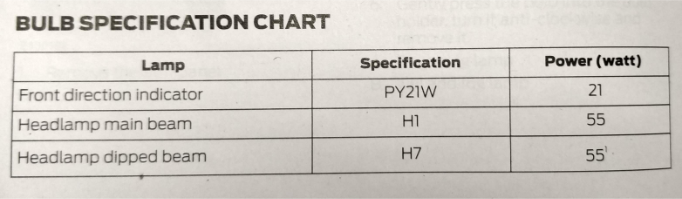
Unfortunately, some manufacturers won’t bother with this.
We’ve come across plenty of cars where the information is either missing or not even started.
If this is the case, then you need to physically take the bulb out and inspect it for yourself.
Manually Inspect Your Bulbs
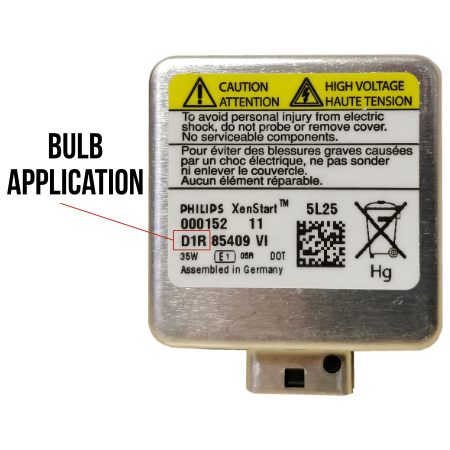
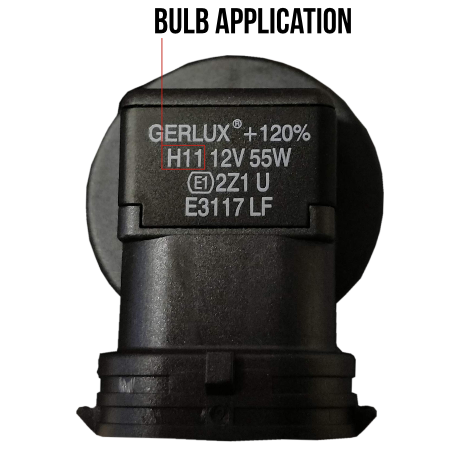
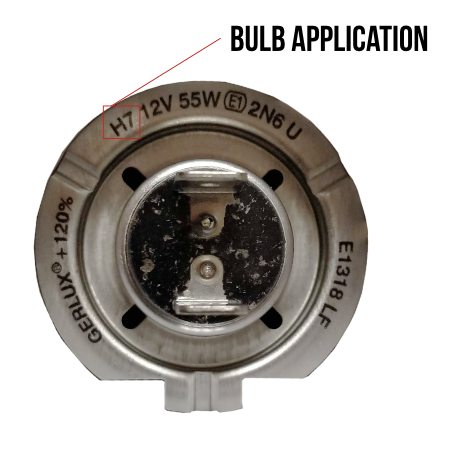
If you don’t have a manual to hand (or if the info is less than helpful), then the next step would be to remove the bulb from your vehicle and inspect the metal or plastic base of the bulb itself.
This should be marked with specifications telling you what application the bulb is, the wattage and sometimes the colour of the bulb.
The bulb you need should be marked or detailed with an application number such as “H1, D2S, 9005, HIR2 etc“.
We designed a tool designed to help you find the right bulbs for your vehicle.
Our database spans over 40,000 makes, models, years and variants for vehicles registered in the UK.
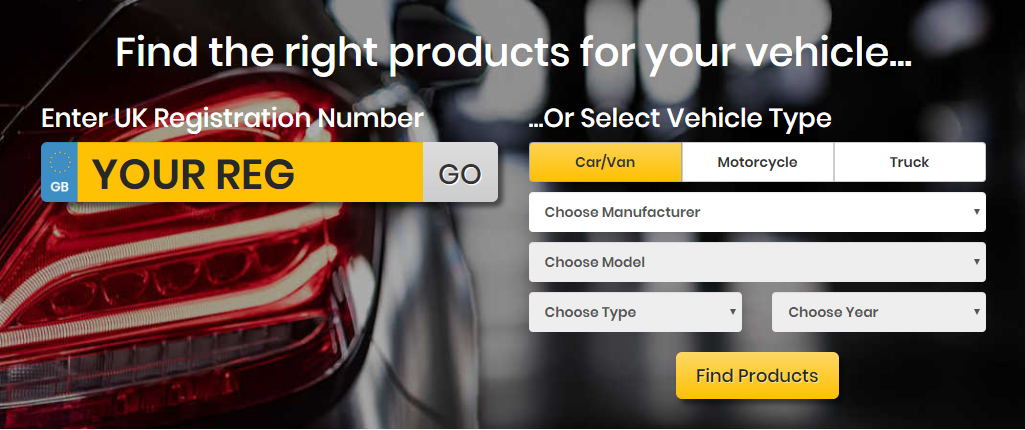
All you need to do is type in your registration and our system will tell you what bulb types you will need.
Our car bulb finder helps you discover what bulbs are needed for your vehicle and also shows you what applications you will need. Here, we are going to show you how it works:
Step One: Enter The Vehicle Registration
Simply enter your registration and click the “GO” button.
If your vehicle’s registration isn’t in our database then try using the right hand side of the car bulb finder.
Select your manufacturer, model, type and year and proceed to the next step.
Step Two: Select Your Bulb Type
Following step one, you might be presented with a pop-up that asks what type of bulb technology your vehicle came with from the factory. This might not appear for every vehicle.
Your user manual will usually state whether your vehicle is Halogen, Xenon or Bi-Xenon.
If this box appears for you then just select the appropriate vehicle type.

Step 3: Choose Your Bulbs
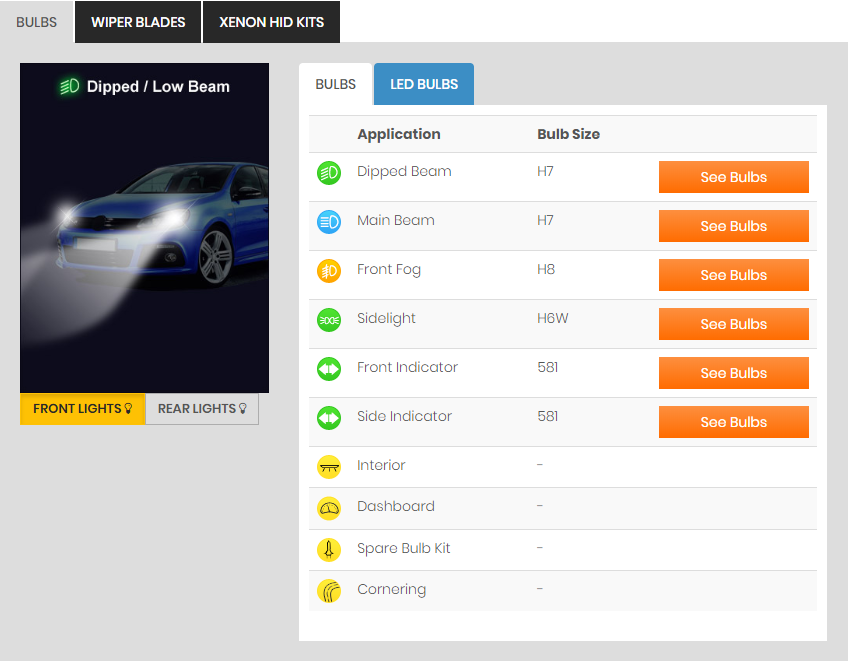
The next page you are taken to will show you all of the bulbs that we think will fit your vehicle. Please bear in mind that some data may not be present due to the ever expanding database of registered vehicles in the UK.
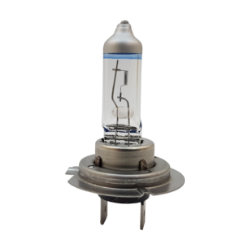
If your original bulb was an H7 bulb then any H7 upgrade or replacement should fit. Please keep in mind that some car bulb holders might not be suitable for upgrading from Halogen to LED however we can supply you with the solution required to fit the bulb.
Want to see it in action? Here’s a quick and easy video guide for steps one to three.
In this section, you will learn about each bulb type and we cover the following:
This should help you decide on the best upgrade bulbs for your vehicle.
Discovering the differences between halogen, xenon and LED bulbs can be difficult to comprehend at times so we’re hoping that this section will help you fully understand the types of headlight bulbs available.
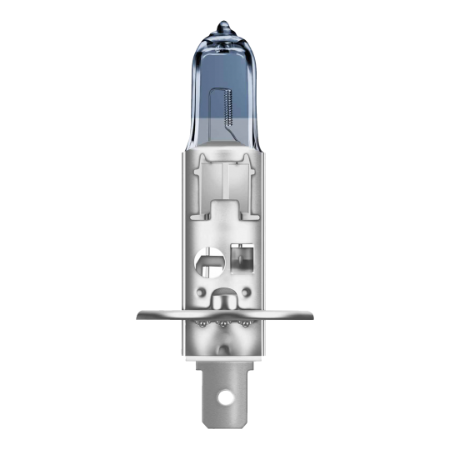
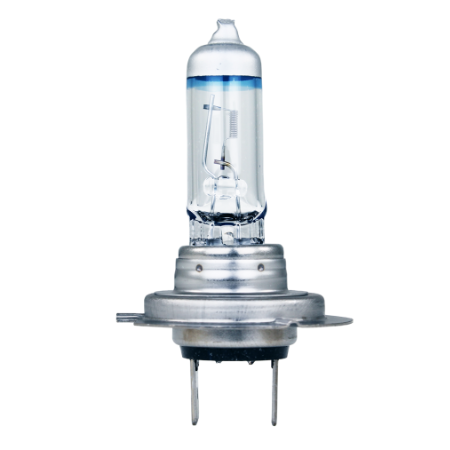
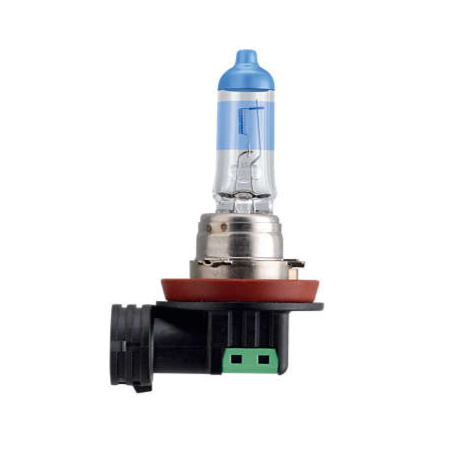
Halogen headlight bulbs are typically the standard bulbs in most cars.
ABD.co.uk has a range halogen upgrade bulbs which include long lasting bulbs, brighter bulbs or bulbs designed for style.
Halogen / Filament tends to be a cheaper alternative but you might want to consider between price vs performance if you are looking for the best possible outcome.
The Drivers’ Trade Off
There is a “light versus style” trade off with halogen bulbs between achieving the most light output and having a whiter coloured light.
A blue coating will make a halogen bulb whiter however this will reduce the light output. This is what we call the Drivers’ Trade Off. If you decide to have whiter halogen lights, just keep in mind that you will be sacrificing the actual light output.
Brighter Lights Will Not Last As Long
Unfortunately, brighter halogen bulbs will not last as long as standard replacements or LED bulbs.
We went in-depth as to how long car bulbs should last in a recent article.
The Main Benefits Of Halogen Upgrade Bulbs
Aside from being a cheaper alternative to most LED headlight bulbs, the main benefit to choosing halogen is that there are no CANBus errors when you change the bulbs over.
Not only are these bulbs perfect for an error free experience but you will also have no bulb holder issues, fully road legal and are a completely low hassle option.
The Baby Bulbs Of The Auto Industry
It’s definitely worth mentioning that LED bulbs are the youngest bulb types for vehicles.
Since the technology is still fairly new – aftermarket LED bulbs may cause issues with your CANBus system displaying errors or hyper-flashing.
The technology is advancing at a fast pace and we predict that it will soon overtake HID kits in both performance and power.
Each new LED product that is released to the public seems to have an increase in performance, technology and compatibility.
Not Road Legal
Unfortunately, all aftermarket LED upgrade bulbs aren’t road legal and may never be. This is because they are different from what the regular car is set-up with and so cannot be E-marked (a legal requirement).
They will also no longer pass an MOT as per government advice, although we have seen some garages turn a blind eye to LED headlights. It is always worth checking with your MOT technician beforehand.
Keep this in mind when upgrading your bulbs.
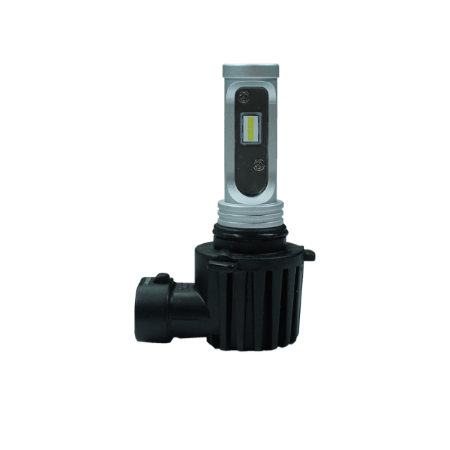
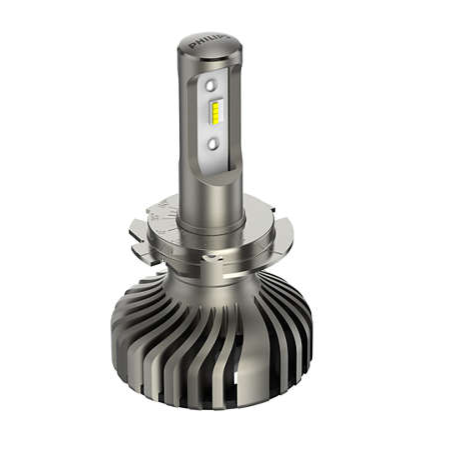
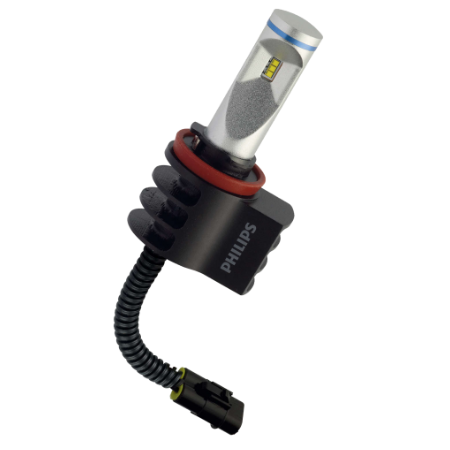
Branded LED Bulbs Are Simply The Best
This is completely accurate. Many retailers sell cheap LED bulbs claiming to be incredibly bright however the position of the bulb can dangerously affect the beam pattern which can be hazardous to other road users.
If you’re shopping around for LED headlight bulbs then we highly suggest only buying branded names like OSRAM, Philips or Twenty20. Try to avoid retailers that claim high brightness levels yet appear to be from an untrustworthy supplier or manufacturer.
Some car owners become worried about upgrading from halogen to LED bulbs so we put together an LED Brightness guide a while back that might come in handy.
Big brand names within the market have been investing heavily into LED headlight bulbs and their are major improvements with every product. From fan-less LED headlight bulbs to incredibly bright LED bulbs for your car, the choices are becoming broader.
Some vehicles might experience CANBus errors but we’ve also got this covered in our CANBus error guide, complete with video.
HID Kits pack an additional 300% – 450% more light when compared to standard halogen bulbs, they are renowned for producing immense lighting for your vehicle.
Containing Xenon gas, these bulbs are often the perfect upgrade choice when showcasing your vehicle.
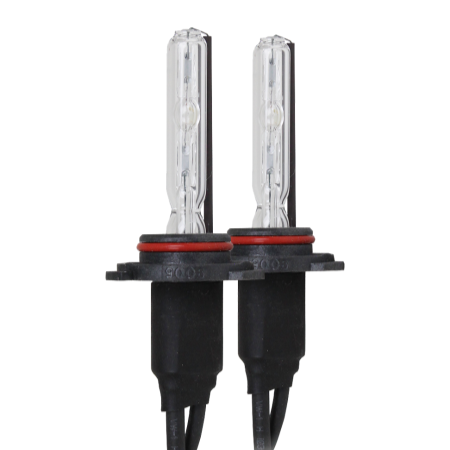
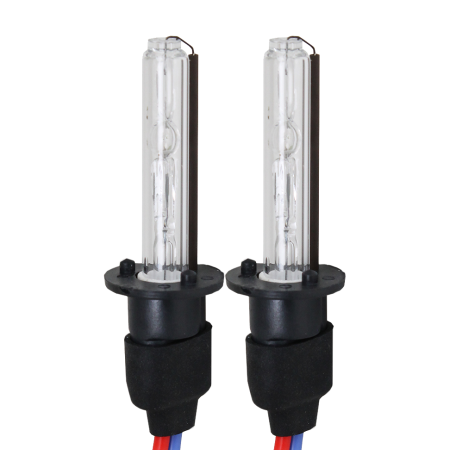
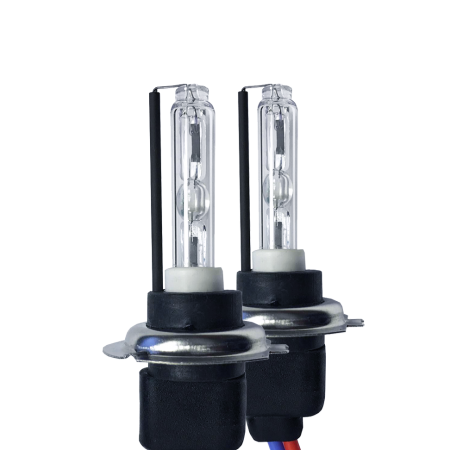
35W HID Kits produce up to 350% more light.
55W HID Kits produce up to 450% more light.
Unfortunately HID kits no longer pass an MOT within the UK. They can still be used for off road use such as on private land for events, cross country and track events.
A simple plug and play system means even a novice can install. This simple system means you can easily switch between your HID kits and your road legal bulbs.
The Brightest Headlight Bulbs Available
It’s worth noting that HID kits are by far the brightest headlight upgrades on the market. There are no other upgrade bulbs available in 2019 that can compare.
Headlight bulbs are designed to have different purposes.
Some are designed to produce as much light as possible, while others are built to last years.
This section is designed to help you understand the different purposes that manufacturers build bulbs for.
Hopefully this prevents you from buying a long life bulb and expect it to be bright.
Choosing between style, brightness and your bulbs’ lifespan can sometimes be a difficult choice.Understanding the difference between them doesn’t have to be though.
The easiest way to learn what the difference is is simple:
When choosing a bulb for your car, try looking for a mixture between a decent lifespan and a good level of brightness.
Our website allows you to filter between different options when trying to find the best headlight bulbs for your vehicle.
Different Bulb Purposes Explained
These bulbs are designed to provide as much light as possible whilst retaining their road legal status. Usually between 10% – 50% whiter and 60% – 200% brighter than standard halogen bulbs. As these have the highest bulb performance, they come with the shortest life (except for high wattage bulbs). You would typically get between 1-3 years of use before they need to be replaced.
The purpose of vision and style bulbs is to offer a good combination of extra light and that sought after stylish whiter light. These bulbs usually give up to an extra 60% more light yet they allow you to still have a nice crisp white beam pattern.
Long life headlight bulbs last much longer than standard or upgrade bulbs. They are not designer for light output improvements on either brightness or colour. The light output would typically be very similar to a standard bulb. However where they win over the others is that they significantly outlive them. Typically these will last a good 4-8 years depending on driving habits. These are a great alternative for owners who are not so concerned with improving light output and simply don’t want the hassle of repeatedly changing bulbs.
Off road headlight bulbs main purpose is to provide you with as much light as possible. They do this by simply ramping up the power. Not economical, but they do provide the highest light intensity over the road legal options. Due to this high wattage, they are the shortest life bulbs on the market, typically lasting 6 months – 2 years depending on their use.
Sometimes you just have a bulb that’s failed and you want to get the car back on the road. If you’re not into the whole upgrade scene, then a simple bulb replacement is probably what you’re looking for. These are a like for like replacement for your existing bulbs, no frills and great value.
We get asked questions all the time.
We’ve collated some of the most asked questions since the conception of ABD.
If you feel like we haven’t covered enough, let us know your questions in the comments below.

Q. Will my new bulb(s) fit?
A. Yes, as long as you have selected the same fitting as your current bulbs. Let’s say your old bulb was a H1 halogen. As long as you have replaced it with another H1 bulb (halogen, LED or HID) then it should fit.
Q. Will my new LED upgrade bulb fit?
A. Yes, most of the time. There are two issues you might come across with aftermarket LEDs.
The first is if you have a specific bulb holder designed for halogen bulbs. If this happens, we can usually supply LED bulb compatible equivalents to use instead.
Q. Will my car show a CANBus error with my new LED’s?
A. In 95% of cases, no. That is as long as you are using a “CANBus compatible” LED bulb. However there are a few very fussy vehicles out there which might still complain.
There’s no way to be 100% sure until your new LED’s have been fitted. If they do show CANBus errors then they can be simply resolved using CANBus resistors or control units.
Q. What does “OE bulbs” mean?
A. OE stands for Original Equipment. In this context, it is referring to the part that was fitted by the factory when the car was new. OE is often used in Xenon HID technology to highlight they are to replace the bulbs on cars that had Xenons fitted from new.
Aftermarket HID bulbs tend to be for those who have upgraded from halogens to HID. Aftermarket LEDs tend to be for upgrades from halogen or Xenon to LED technology.
Q. What’s The Difference Between Dipped And Main Beam?
A. Your dipped beam (low beam) is what you have on all the time when driving at night. Your main beam (high beam) is what you put on when on dark country roads without street lights, or when flashing other drivers.
Q. What do colour temperatures mean for car bulbs?
A. Bulbs come in different colour temperatures that usually consist of 4 digits followed by a K (kelvin). There is a great colour temperature explanation on Wikipedia however for headlight bulbs, the rule usually looks something like this:
Anything below 3200K will be a murky yellow, and above 8000k will veer into dark blue and purple.
Q. What colour temperature do I need?
A. It’s completely up to you.
The colour temperature (kelvin) that the bulb gives off is a style choice.
5000k is brighter than 6000k or 8000k bulbs and gives off a nice white light but again, this is more based off of style choices.
To mimic the LED style, you will want to go for 6000K colour temperature. For Xenons, 6000K-8000K is the perfect choice to suit the style.